Introduction
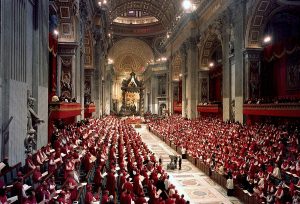 In the last article, I discussed the complementary relationship between Scripture and Apostolic Tradition. There was a point I had not covered, though. How do we know what is and isn’t authentically Apostolic? As Catholics, our answer is the teaching authority of the church, otherwise known as the Magisterium. This deserves a fuller explanation, though. Throughout this article, I will lead you through three arguments to prove the necessity of the Magisterium: Logical, Scriptural, and Historical. Note that this article is disinterested in which Magisterium is the right one. Although Catholic Unraveled holds that the Catholic Magisterium is the one true teaching authority, the discussion as to why is beyond the scope of this article. My goal here is to argue for the need for A Magisterium, whether it be Catholic, Orthodox, or something in between. Future articles in this series will examine which Church possesses this authority, its development, and how it functions.
I also want to state that you will not see the word Magisterium, but will see the concept. Just know that the Magisterium is at play when the bishops, in union with the Pope, teach authoritatively on matters of faith and morals. In other words, the Apostles didn’t call themselves the Magisterium at the Council of Jerusalem, but they do act in that capacity. They fulfill the concept without using the word.
What is the Magisterium?
Before I begin, it’s necessary to quickly cover what the Magisterium is.“The task of giving an authentic interpretation of the Word of God, whether in its written form or in the form of Tradition, has been entrusted to the living teaching office of the Church alone. Its authority in this matter is exercised in the name of Jesus Christ.”This means that the task of interpretation has been entrusted to the bishops in communion with the successor of Peter, the Bishop of Rome.” (CCC 85) In short, the Magisterium is the official teaching office and authority of the Church. There are some confusing usages and derivatives of this word that you may see in Catholic writing and media. Just know that, regardless of the context or usage, it always returns to the visible teaching office and authority of the Church. There are not multiple Magisteria but rather multiple ways in which the Church conveys the decisions and teachings of the office.
The Magisterium is the office of Bishops in union with the Pope, guided by the Holy Spirit, with input from theologians, priests, and other important figures who define and protect the teachings of the Church. For added context, when I say “other important figures,” I mean professionals who can weigh in on matters usually from a secular point of view. For example, if the Magisterium were trying to investigate whether a new medical treatment is morally permissible, they’d ask for input from medical professionals who are highly educated in the subject. The College of Bishops are experts on matters of faith and morals, not medicine, psychology, engineering, etc. For the Bishops to make rulings without the input of experts would be irresponsible.
These are not people who make arbitrary rulings for no reason. On most subjects, in fact, the Magisterium will not rule unless necessary. In other words, the Magisterium typically does not rule on matters of theological theory so long as it doesn’t affect the core of the faith and it doesn’t threaten the unity of the Church. For example, they have not ruled whether Genesis should be interpreted literally or figuratively. The Church is open to both options so long as the core message is retained. Genesis may be figurative, but that doesn’t discount the reality of original sin. The Earth may have been created in 7 days or 100 million years, but either way, God created ex nihilo.
The Magisterium does rule on subjects such as social ethics when souls are at stake. For example, the Magisterium teaches all people to hold within themselves an inherent dignity. When the faithful struggle in moral areas of the modern world, the Magisterium will often make a declaration on the particular situation.
There are some examples of Magisterium rulings to look at that are accessible to all the faithful. The Catechism of the Catholic Church is the most popular. The documents from Church councils, such as the Council of Trent or Vatican II. Even letters from the Pope addressed to all the faithful. These are all examples of the Magisterium practicing its authority as the teaching office of the Church.
That doesn’t answer the big question, though. Why have a Magisterium? Shouldn’t personal interpretations of Scripture be enough? That brings us into the main issue suffered throughout Christianity ever since the Reformation.
The Logical Argument
The need for the Magisterium is a logical one, but requires a scriptural backdrop to frame the argument. “My prayer is not for them alone. I pray also for those who will believe in me through their message, that all of them may be one, Father, just as you are in me and I am in you. May they also be in us so that the world may believe that you have sent me. I have given them the glory that you gave me, that they may be one as we are one— I in them and you in me—so that they may be brought to complete unity.” (John 17:20-23) My argument lies on a few legs, but they all have the need for true unity at their core.
I want to preface this argument by clarifying that I am in no way attempting to bash or discourage our Protestant brothers and sisters. Firstly, it is clear from these passages that Christ wishes for his Church to be unified in him.
Secondly, as Catholics and as Christians, we fundamentally accept that objective truth exists. In other words, truth only to the extent that statements adhere to reality. One can have differing opinions or points of view, but we do not live in different realities. If I say that a glass is full but another person sees it as empty, one must be true while the other is false. Both of these statements cannot be true. However, at the same time, I can say a painting is beautiful, while someone else believes it is ugly. This isn’t a difference of reality but rather a difference of view. Neither is true, as it depends on one’s thoughts and not facts of reality. Scripture doesn’t claim to be a matter of opinion, though. Scripture is true to the extent that what it teaches conforms to reality.
Finally, a non-unified institution ultimately collapses. A house built on sand as a foundation cannot stand. However, Christ told us, “I will build my Church on this rock”.
Consider this. Depending on who your source is, there are between 6 and 33,000 denominations. The true number is inconsequential. What is important is that different denominations clash on important doctrines. How are we saved? One says faith alone, while another says baptism is required. Did Jesus bodily resurrect? Some believe he did, while others believe he resurrected in a spiritual body. Who should be baptized and why? These are major doctrines that Protestant denominations disagree on, and they’re extremely central to Christian theology.
When everyone is a private interpreter, there is no definitive arbiter of truth. You could argue that all people are led by the Holy Spirit, but why would it allow disagreement on central issues? Even in Catholic circles, we disagree on certain points, but none that compromise the essential doctrines of faith. We may argue how Christ becomes present in the Eucharist, but the point remains that he is present. This is different from subjects such as the necessity of baptism. If baptism is not necessary, then it is of little importance beyond being a nice symbol. If baptism is necessary, it is of the utmost importance. If it is necessary, then souls hang in the balance. The words of Flannery O’Connor come to mind. “If it’s[The Eucharist] just a symbol, to hell with it,”
When it comes to substantial doctrine, especially concerning salvation, it would seem Christ would have left us with a reliable authority. If the Holy Spirit is the reliable authority guiding all Christians, how can we account for such fundamental disagreement on essential doctrines? To be clear, I’m not speaking against the guidance of the Holy Spirit, but when individuals arrive at contradictory conclusions on essential doctrines, all claiming the Spirit’s guidance, it becomes apparent that human perception and error is coming into play. The Magisterium acts as a safeguard, a communal discernment under the Spirit’s guidance, ensuring that interpretation conforms to the apostolic faith rather than personal opinion.
The Magisterium doesn’t exist to create truth but rather to protect the Church and preserve unity in truth. Look at the Council of Trent. The Church didn’t call the Council because they didn’t like what was being said. The reformers made serious claims that posed a possible spiritual danger to the Church.
Scriptural Argument
The necessity of the Magisterium can become clear from logic alone, but of course, when it comes to matters such as this, we have to go into scripture too. Quick note: I’m not pretending any one verse stands on its own as a slam-dunk. I invite you to review the whole section before creating your own conclusions. With that said, we begin in 2 Peter.
“Knowing this first, that no prophecy of the scripture is of any private interpretation.” (2 Peter 1:20) Scripture itself warns us against private interpretation. Man’s heart is deceptive and his understanding limited. Now, to be clear, that is not to disparage private revelation. Scripture can strike a single man’s heart differently than another, but that is a different matter from altering the meaning of scripture altogether. For one to think the book of Job is sorrowful and another to believe it’s hopeful is one thing. For one to believe Jesus bodily resurrected and another to believe he spiritually resurrected is a much more serious matter.
Ok, but how do we know who interprets scripture? “If I am delayed, you will know how people ought to conduct themselves in God’s household, which is the church of the living God, the pillar and foundation of the truth.” (1 Timothy 3:15) Notice he identifies the Church and not the individual believer as the pillar and foundation of truth.
“If he refuses to listen to them, tell it to the church; and if he refuses to listen even to the church, let him be to you as a Gentile and a tax collector.” (Matthew 18:17) Christ tells the Apostles(the original Magisterium) that if one refuses to listen to the Church let him be to them as a Gentile and a tax collector. The Church here is being placed as the final and ultimate earthly authority.
In Acts 8 we read of a conversation between Philip and an unnamed man. “Then Philip ran up to the chariot and heard the man reading Isaiah the prophet. “Do you understand what you are reading?” Philip asked. ”How can I,” he said, “unless someone explains it to me?” So he invited Philip to come up and sit with him.” (Acts 8:30-31)
The man recognizes he needs a teacher. He needs someone authorized and equipped to explain Scripture. If even a straightforward reading of Isaiah required an authorized teacher, how much more complex do theological disputes require authoritative adjudication?”
In Acts 15, we read of the Council of Jerusalem. Notice the last two verses. “It seemed good to the Holy Spirit and to us not to burden you with anything beyond the following requirements: You are to abstain from food sacrificed to idols, from blood, from the meat of strangled animals and from sexual immorality. You will do well to avoid these things.” (Acts 15:28-29) Even though the specific name isn’t used, this is one of the most explicit examples of the Magisterium in the early Church. The Apostles and Elders are using the authority of their Magisterial roles to pass on authoritative teaching on the necessity of circumcision. Note how this isn’t simply the Apostles and Elders acting on their own. They declare that they pray and judge in communion with the Holy Spirit.
Historical Argument
Historically, we see plenty of evidence, of which I’ll go through a few examples. As I said earlier in the article you won’t see the word Magisterium. You will see the concept, though. The word magisterium didn’t exist until the 16th century. Its origins lie in the Latin word magister, which means master teacher. Also note, I will be going through evidence based on dates, and some pieces are weaker than others.
“Appoint, therefore, for yourselves bishops and deacons worthy of the Lord… for they also minister to you the ministry of the prophets and teachers.” (The Didache 70-90 AD) Personally, I regard The Didache as the weakest evidence not because there’s anything wrong with it, but because the authors are unknown. I don’t believe the anonymity is enough to fully discredit it, though, because regardless of authorship, the document is impeccable in its theology. Regardless of whoever wrote The Didache, we see that they believed that the bishops and deacons were to act as an authority to their congregation.
“Through countryside and city [the apostles] preached, and they appointed their earliest converts, testing them by the Spirit, to be the bishops and deacons of future believers. Nor was this a novelty, for bishops and deacons had been written about a long time earlier. . . . Our apostles knew through our Lord Jesus Christ that there would be strife for the office of bishop. For this reason, therefore, having received perfect foreknowledge, they appointed those who have already been mentioned and afterwards added the further provision that, if they should die, other approved men should succeed to their ministry” (Pope Clement I to the Church in Corinth 96 AD) To add context, this excerpt is from a letter Pope Clement I sent to the Corinthians after they had overthrown the elders of their Church. Firstly, this is strong evidence of the early belief in Apostolic Succession. Secondly, it shows us that from the earliest years of the Church, the office of Bishop was one of influence. They were trusted to authoritatively teach and spiritually protect their local congregations.
“See that you all follow the bishop, even as Jesus Christ does the Father, and the presbytery as you would the apostles; and reverence the deacons, as being the institution of God. Let no man do anything connected with the Church without the bishop.” (Ignatius to the Smyrnaeans 107-110 AD)
Ignatius of Antioch was a disciple of John the Apostle and Bishop of Antioch. In this excerpt, we see a clear hierarchy. Bishop->Priest->Deacon. However, he says something particularly interesting. “See that you all follow the bishop, even as Jesus Christ does the Father.” For their local congregations, the bishop is seen as having ultimate teaching authority, with priests acting as the bishop’s vicars, in a sense.
Parishioners typically did not interact with the bishop outside of specific events or when necessary. Usually, the troubles of parishioners were brought to the priest and escalated to the bishop when needed. This is especially true due to the fact that correspondence was slow and unreliable. Sending a letter to your bishop could take weeks if it made it at all. Few inquiries made it to the bishop, and even fewer ever made it to the Pope himself.
“For it is a matter of necessity that every Church should agree with this Church [of Rome], on account of its preeminent authority…” (Against Heresies AD 180) Irenaeus of Lyons places a large amount of magisterial authority on the Roman church specifically. Notice the word he uses: preeminent authority. He’s not calling the church in Rome one church among many but THE church whose authority surpasses all others.
“For my part, I should not believe the gospel except as moved by the authority of the Catholic Church.” (Contra epistolam Manichaei AD 397) St. Augustine again places ultimate authority on the institutional Church. He declares that the Church holds authority without any mention of private interpretation. He isn’t interpreting scripture and the Church gives him useful commentary. He states clearly that the Church holds true authority.
A Final Statement
As we’ve seen over the last three sections, the Magisterium has the ultimate authority on matters of faith and morals. This is supported logically, scripturally, and historically. When we become our own sole interpreters, we can possibly come to the core truths by human reason, but we miss out on the fullness of truth. Christ wished for his Church to be unified and thus instituted a visible Church. Not just a vague congregation of believers but a true living body with everyone acting as their own organ. Being the kidney of the Church may not be one’s desired role, but for the kidney to try to act as the heart would be the same as wishing death on the entire body. Rather, we should be proud of our roles given to us by God and serve according to our vocation while respecting the vocation and office of others.
As I stated earlier, this isn’t about disregarding private revelation but preserving truth. You can be subject to the Magisterium and private revelation, assuming it’s in line with the faith. By allowing ourselves to be subject to the Magisterium, we protect the core of our faith.
It is also not a call to blind following. I’m not saying to abandon all reason. However, regardless of whether or not we agree with the Magisterium, we must understand which teachings are and are not negotiable as well as analyze all teachings of the Magisterium with good faith and with a true effort at understanding.
 First Sorrow: Mary Hears the prophecy of Simeon in the Temple
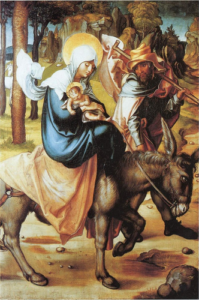 Second Sorrow: Mary flees with Joseph into Egypt to save Jesus
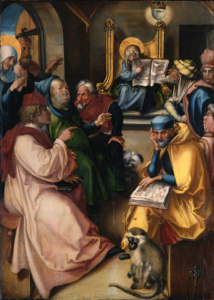 Third Sorrow: Mary loses Jesus and finds Him again in the Temple
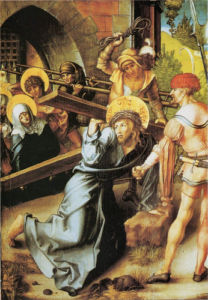 Fourth Sorrow: Mary meets Jesus carrying the cross on the way to Calvary
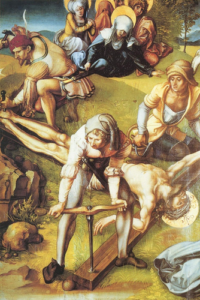 Fifth Sorrow: Mary is present at the Crucifixion and Death of Jesus
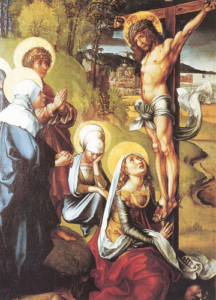 Sixth Sorrow: Mary receives the dead body of Jesus in her arms
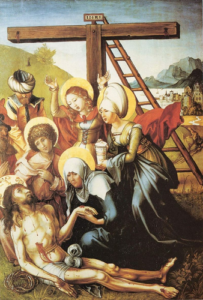 Seventh Sorrow: Mary accompanies Jesus to His Burial
https://shorturl.fm/iqLOU
https://shorturl.fm/Mmt7f
https://shorturl.fm/SIuI7
https://shorturl.fm/2eXcz
https://shorturl.fm/d5IzO
https://shorturl.fm/aDje7
https://shorturl.fm/KTTEV
https://shorturl.fm/H9Uik
https://shorturl.fm/PeJLx
https://shorturl.fm/zyGEC
https://shorturl.fm/R6rxO
https://shorturl.fm/jMW4Y
https://shorturl.fm/7aTeA
https://shorturl.fm/c2hnR
https://shorturl.fm/aEog8
https://shorturl.fm/80TfB
https://shorturl.fm/JuSgj
https://shorturl.fm/GCLRu
https://shorturl.fm/ZovU7
https://shorturl.fm/6q0S2
https://shorturl.fm/E4jwU
https://shorturl.fm/NFOKo
https://shorturl.fm/gNVhP
https://shorturl.fm/bjCRR
https://shorturl.fm/sQU03
https://shorturl.fm/hXBUB
https://shorturl.fm/Vkwte
https://shorturl.fm/N2Mt4
https://shorturl.fm/aJ79H
https://shorturl.fm/YUtIT
https://shorturl.fm/RHMzZ
https://shorturl.fm/9yXkW
https://shorturl.fm/76eA4
https://shorturl.fm/XRIxm
https://shorturl.fm/ny2nF
https://shorturl.fm/oioXy
https://shorturl.fm/jZkod
https://shorturl.fm/TRi5J
https://shorturl.fm/0bIne
https://shorturl.fm/8w1iy
https://shorturl.fm/Vz4OX
https://shorturl.fm/J8GWT
https://shorturl.fm/cotbg
https://shorturl.fm/BK5ly
https://shorturl.fm/92MoP
https://shorturl.fm/sTRB2
https://shorturl.fm/Ds1oo
https://shorturl.fm/Tj9S2
https://shorturl.fm/v02Gf
https://shorturl.fm/DlpCy