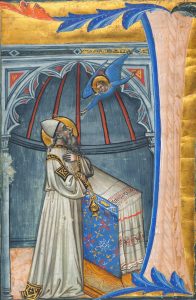
Introduction
I do apologize that it’s been a minute since I have released an article. To be completely honest, I’ve had some personal issues I had to get figured out and managed. It was nothing bad but life demands attention sometimes. I cannot pretend that it hasn’t affected aspects of my life. That being said, things are finally getting under control. I have a couple of unannounced projects going on in the background.
With my unannounced hiatus over, I return with an article about a subject you’ve probably heard lots about from Protestants but we ourselves take for granted: Tradition and its place in our faith. Before anything, though, I want to be clear on what tradition is. Below you’ll find a picked-out excerpt from our old friend the Catechism.
What is Tradition?
“One common source…
“Sacred Tradition and Sacred Scripture, then, are bound closely together, and communicate one with the other.
For both of them, flowing out from the same divine well-spring, come together in some fashion to form one thing, and move towards the same goal.
Each of them makes present and fruitful in the Church the mystery of Christ, who promised to remain with his own ‘always, to the close of the age.’
There are two distinct modes of transmission:
‘Sacred Scripture is the speech of God as it is put down in writing under the breath of the Holy Spirit.’
‘And [Holy] Tradition transmits in its entirety the Word of God which has been entrusted to the apostles by Christ the Lord and the Holy Spirit.
It transmits it to the successors of the apostles so that, enlightened by the Spirit of truth, they may faithfully preserve, expound and spread it abroad by their preaching.’
As a result, the Church, to whom the transmission and interpretation of Revelation is entrusted,
‘…does not derive her certainty about all revealed truths from the holy Scriptures alone.
Both Scripture and Tradition must be accepted and honoured with equal sentiments of devotion and reverence.’
The Tradition here in question comes from the apostles and hands on what they received from Jesus’ teaching and example, and what they learned from the Holy Spirit.
The first generation of Christians did not yet have a written New Testament, and the New Testament itself demonstrates the process of living Tradition.
Tradition is to be distinguished from the various theological, disciplinary, liturgical or devotional traditions, born in the local churches over time.
These are the particular forms, adapted to different places and times, in which the great Tradition is expressed.
In the light of Tradition, these traditions can be retained, modified or even abandoned under the guidance of the Church’s Magisterium.”
(CCC 80-83)
That excerpt is quite dense but vital. Let’s break that down. In short: Scripture and Tradition flow from the same divine source. Scripture is God’s written word, while Tradition is the living transmission of that word through the Apostles and their successors. The Church receives both as essential and inseparable.
So, there are two types of tradition. Apostolic tradition and, for the sake of this article, what I will call cultural tradition. Cultural tradition refers to the theological, disciplinary, liturgical or devotional traditions (little “t”) mentioned in the above excerpt. They are based on scripture but not mandated by it nor seen as such by the Early Church. The Magesterium may or may not enforce cultural traditions depending on that traditions relevance to the spiritual needs of the faithful.
Apostolic tradition is that which has been passed down to us from the Apostles. “The first generation of Christians did not yet have a written New Testament, and the New Testament itself demonstrates the process of living Tradition.” The early Church Fathers — whose writings I highly recommend exploring if you haven’t — show Apostolic Tradition in action. Here’s the way I like to put it, especially because nearly all Apostolic tradition is deeply rooted in Scripture: the truth of Christianity is found in Scripture, given form by way of Apostolic Tradition.
Now, what does that mean exactly? For example, through Scripture we learn that the Father, Son, and Holy Spirit all have some sort of connection. It is through the use of Apostolic Tradition that we learn of the Trinity. Although the concept of the Trinity exists in Scripture, it is through Apostolic Tradition that we gain knowledge of the totality of this concept, even though some mystery remains. The Church has no authority to contradict, dismiss, or invalidate Apostolic Tradition.
Cultural traditions are those practiced by certain communities or even the whole Church, but are not founded in the oral traditions of the Apostles. These could also be called disciplinary or devotional traditions. They may be based on Scripture, but aren’t found in Scripture.
The largest cultural tradition? The Rosary. The Rosary was a later devotional practice often attributed to Saint Dominic. It does find its inspiration in early Christian practice, but you’d never see the Rosary in Scripture. The Rosary is a meditation on Scripture.
That being said, the Rosary, along with other cultural traditions, can be refined, modified, or even ceased with direction from the Magisterium. They also may or may not be enforced depending on their importance in the eyes of the Magisterium. Catholics should pray the Rosary, but you don’t have to pray the Rosary to be a good Catholic.
On the other hand, for a long time the Magisterium used to enforce pre-Eucharist fasting. This changed eventually, though mostly due to logistical difficulties for some priests. Now the minimum Eucharistic fast is 1 hour before Mass instead of the entire day before receiving the Eucharist. Not that the old way of Eucharistic fasting is bad. The Magisterium just no longer binds the faithful to it.
In short, cultural tradition may be central to how we express our faith and even serve a spiritual benefit, but not to the truth of the faith.
Isn’t the Bible enough for salvation?
This answer requires a bit of nuance. “The Church, to whom the transmission and interpretation of Revelation is entrusted, does not derive her certainty about all revealed truths from the holy Scriptures alone. Both Scripture and Tradition must be accepted and honored with equal sentiments of devotion and reverence.” (CCC 82)
Scripture contains what is necessary for salvation, but the Church teaches that certainty about revealed truth requires both Scripture and Tradition. However, Scripture or Tradition alone lacks the totality of truth.
Think of it like being able to look through a keyhole but not being able to open the door. You may get a general view of what is inside the room, but you cannot see everything that is inside. However, everything inside the room is in immaculate condition. The same with our faith. Scripture is infallible and allows you to look through the keyhole, but Apostolic Tradition opens the door.
Apostolic Tradition takes the truths implicitly or explicitly found in Scripture and unfolds them, giving us the full, articulated teaching of the Church. It allows us to open the door and see the totality of truth. Different people can come to different conclusions about truth, though. Hence, Christ gifted us the Church to guide the faithful in light of Scripture and Apostolic Tradition.
Where does the Bible say we need Tradition?
The first verse most Protestants point to is 2 Timothy 3:16-17: “All Scripture is God-breathed and is useful for teaching, rebuking, correcting and training in righteousness, so that the servant of God may be thoroughly equipped for every good work.”
Notice how this scripture begins, though: “All Scripture” not “Only Scripture.” This passage doesn’t exclude tradition. It’s advocating for the usefulness of Scripture. All glue is useful for binding objects together, but that doesn’t mean tape cannot serve the same function.
Also look at verses 14-15: “But as for you, continue in what you have learned and have firmly believed, knowing from whom you learned it, and how from childhood you have been acquainted with the sacred writings which are able to instruct you for salvation through faith in Christ Jesus.” So, the author here isn’t telling his audience to only listen to what was learned through Scripture but to what they had already learned through the oral tradition.
In fact, per 2 Timothy 2:2: “And the things you have heard me say in the presence of many witnesses entrust to reliable people who will also be qualified to teach others.” Paul is commanding Timothy to pass on an oral tradition.
Consider that at this time, much of Scripture hadn’t even been written, so people were relying on oral tradition for truth. Timothy would have known of the Old Testament but relied on oral traditions for the teachings of Christ. While the word ‘Tradition’ isn’t mandated in a single verse, the concept is woven throughout the New Testament, just as the divinity of Christ is revealed through His words and actions, not a single proof-text.
The logical argument
An artist makes a painting. Over the years, the painting has been seen by more and more people who assign their own meanings. Eventually, so much time has passed that the meaning of the painting has been lost to time.
Now, who do you think has a better grasp of the intention of the original artist? Someone who just saw the painting last week, or those only a generation away from the artist? How long did it take for that understanding to degrade? In this case, you would return to those who were only a generation or two away.
You’d search for common understandings and common threads. Eventually, as you move further away, you’d notice new ideas, but the seeds already existed. It is the same with Scripture. This mirrors the source of Apostolic Tradition. We return to the Church Fathers to learn the original understanding passed down from the ‘artists’ of our faith—the Apostles, who were taught directly by Christ.
Didn’t Jesus Admonish the Pharisee’s for their Traditions?
Jesus did admonish the Pharisees for their traditions, but this simple statement doesn’t hit at the core of the issue. Let’s look at what Jesus said:
“Now when the Pharisees gathered to him, with some of the scribes who had come from Jerusalem,
they saw that some of his disciples ate with hands that were defiled, that is, unwashed.
(For the Pharisees and all the Jews do not eat unless they wash their hands properly, holding to the tradition of the elders,
and when they come from the marketplace, they do not eat unless they wash.
And there are many other traditions that they observe, such as the washing of cups and pots and copper vessels and dining couches.)
And the Pharisees and the scribes asked him,
“Why do your disciples not walk according to the tradition of the elders, but eat with defiled hands?”
And he said to them,
“Well did Isaiah prophesy of you hypocrites, as it is written,
‘This people honors me with their lips,
but their heart is far from me;
in vain do they worship me,
teaching as doctrines the commandments of men.’
You leave the commandment of God and hold to the tradition of men.”
And he said to them,
“You have a fine way of rejecting the commandment of God in order to establish your tradition!
For Moses said,
‘Honor your father and your mother’;
and, ‘Whoever reviles father or mother must surely die.’
But you say,
‘If a man tells his father or his mother, “Whatever you would have gained from me is Corban”’ (that is, given to God)—
then you no longer permit him to do anything for his father or mother,
thus making void the word of God by your tradition that you have handed down.
And many such things you do.”
(Mark 7:1-13)
Jesus isn’t saying that traditions in and of themselves are bad. It’s when traditions of man contradict the commandments of God. Traditions must always exist in union with Scripture to form the singular deposit of faith. “Sacred Tradition and Sacred Scripture make up a single sacred deposit of the Word of God” (CCC 97).
Neither can supersede the other. If they do that, it means either we have not understood Scripture or our tradition is not of God. Not only that, but the Pharisees were not following the very traditions they were handing down. So, the Pharisees are not citing tradition because they are trying to be godly, but they are trying to hold it over others. They teach standards they themselves did not follow.
As Catholics, we must be careful not to ‘choose’ traditions but to receive them as a gift to strengthen our understanding of Scripture. We are called to study them critically, but we cannot simply only take the parts we like. Why? Because God, in His wisdom, didn’t give us a book and leave us to figure it out alone. He gave us a living Church, guided by His Spirit, with Scripture and Sacred Tradition as the twin pillars of a single, unchanging Truth. He gave us this institution and all the writings and Traditions that come with it so that we may obtain the fullness of truth and the beatific vision.
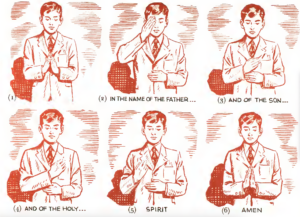
 First Sorrow: Mary Hears the prophecy of Simeon in the Temple
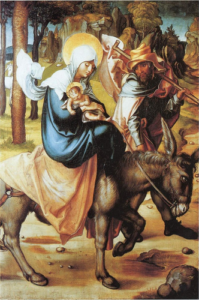 Second Sorrow: Mary flees with Joseph into Egypt to save Jesus
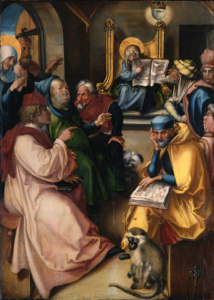 Third Sorrow: Mary loses Jesus and finds Him again in the Temple
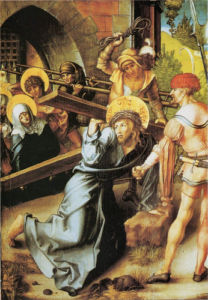 Fourth Sorrow: Mary meets Jesus carrying the cross on the way to Calvary
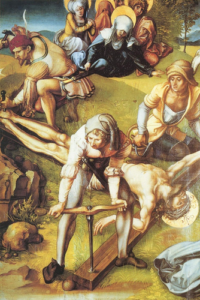 Fifth Sorrow: Mary is present at the Crucifixion and Death of Jesus
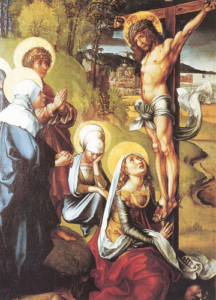 Sixth Sorrow: Mary receives the dead body of Jesus in her arms
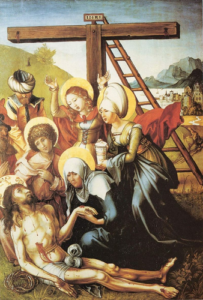 Seventh Sorrow: Mary accompanies Jesus to His Burial
https://shorturl.fm/q7nV2
https://shorturl.fm/stIUj
https://shorturl.fm/6SqWk
https://shorturl.fm/chjAr
https://shorturl.fm/XGjPi
https://shorturl.fm/7WQsC
https://shorturl.fm/3LOOG
https://shorturl.fm/vmCY0
https://shorturl.fm/isUFe
https://shorturl.fm/Gkd4j
https://shorturl.fm/oORLs
https://shorturl.fm/f0EDd
https://shorturl.fm/JKyiM
https://shorturl.fm/yqUh5
https://shorturl.fm/j5VOH
https://shorturl.fm/SHXDr
https://shorturl.fm/u6mpl
https://shorturl.fm/sBjf9
https://shorturl.fm/gT8s9
https://shorturl.fm/Ti3qn
https://shorturl.fm/emX9k
https://shorturl.fm/Oa2zc
https://shorturl.fm/tte4J
https://shorturl.fm/Mm47k
https://shorturl.fm/YUCFN
https://shorturl.fm/5OJph
https://shorturl.fm/g2hI7
https://shorturl.fm/ygG1B
https://shorturl.fm/YxmaT
https://shorturl.fm/hPZwP
https://shorturl.fm/12TYm
https://shorturl.fm/oIgPB
Great post! It’s fascinating how roulette probabilities mirror AI tool selection-both require calculated choices. For AI Translation tools, checking out AI Translation can streamline your decisions, much like understanding odds improves gameplay.
https://shorturl.fm/wulPa
Downloaded the q9betapp, felt kinda dodgy from the get go. Anyone else feel the same? Maybe it’s me. I am on Android, might be different on iOS. q9betapp
https://shorturl.fm/OZB6p
39jlcom is a solid option for online gaming. Worth checking out for sure! See what they offer here: 39jlcom
https://shorturl.fm/2WLg5
https://shorturl.fm/9t7BW
https://shorturl.fm/5HtZA
https://shorturl.fm/v4J9X
Looking to improve my horse racing bets on Nesine! Anyone following the ‘nesine at yarışı yorumları’? Are they any good, or just throwing darts at the board? nesine at yarışı yorumları
Downloaded the x777gameapk and it runs really snappy. No lag issues so far, which is a big win. Always good to have it on your phone: x777gameapk
Smart bankroll management is key, especially with fast-paced online games. Seeing platforms like jboss prioritize secure, instant payments & AI-driven game discovery is a huge step forward for responsible gaming! It’s about tech and trust.